
This Tortilla Toaster Is Fixing To Transform Your Taco-Eating Life

This is part of a special series, presented by Thrivent Financial, that focuses on a diversity of American inventors and innovations.
Because you can never have just one taco, we’re very pleased that inventor and innovator Elliot Benitez has devised a tortilla toaster that can warm up to 6 tortillas in 60 seconds.
As the story goes, Benitez was catching up with his mother over a home-cooked meal when he noticed what was actually happening at the dining table. His mother kept stepping away — missing conversation — in order to keep up with the familia’s appetite for hot tortillas during meals.
It led him to actually do some math about how much time his mother had been warming tortillas at home since he was a young boy. "By determining the amount of time it takes to warm a single tortilla, I was able to calculate my mother had spent 60 days over a 20-year period to warming batches of tortillas for our family," said Benitez.
The Nuni toaster idea took off a few years ago when they launched a crowdfunding campaign on IndieGogo. The innovative kitchen electronic comes with five toaster heat settings and a one-touch start auto shut off; there’s no flipping necessary, and it can easily warm up corn, wheat and flour tortillas. We’ll have to put it to the test with coconut flour tortillas soon. Fun fact: Its parallel heating slots are inspired by the grille of the classic 1957 Bel Air.
Check it out in action:
With this safer, faster, and more efficient way to prepare tortillas to enjoy with tacos and meals, America will never need to cook tortillas on a pan or in the microwave again.

The Smart Home Is A Thing. But This Robot Is The Key To A Healthy Home.

This is part of a special series, presented by Thrivent Financial, that focuses on a diversity of American inventors and innovations.
He counts your pills for you, checks on your weight and exercise activity, and even informs you of the nutritional content in one serving of celery. But he's not your nursing technician - he's Pillo, an actual robot who helps to watch over your health.
What once began as an ambitious crowdfunding project is finally becoming a reality. The first personal healthcare robot assistant of its kind, Pillo is making waves in the medical community.
It all started in 2015 when a group of young engineers came together in New York City with passion and a vision: to change the way we manage healthcare at home with one cute robot at a time. With sophisticated voice recognition and facial identification, Pillo can handle a variety of tasks, like dispense the right types and amount of pills for each family member; video call health practitioners; and place refill orders right from where it sits on the counter. Pillo can also answer all sorts of real-life health questions and remind you when it's time to take your medicine or vitamins. The AI technology is remarkable, but its principles are simple. Pillo has plenty of potential for positively impacting at-home health needs across the nation, helping many Americans live healthier.
In this video, you get a real sense of how the Pillo robot can change things at home:
A health technology revolution is underway. And by the looks of Pillo's popularity in its crowdfunding stage, it appears that many people are ready to give the cute little health machine a chance at improving an important part of our lives.
Pillo is currently in its final production stages and is scheduled to launch into the market this year.
Image via Pillo.

Imagine A Cup You Can Actually Eat Instead Of Throwing Away.

This is part of a special series, presented by Thrivent Financial, that focuses on a diversity of American inventors and innovations.
Each year Americans throw away an average of 25 billion plastic cups that fill up landfills, never to decompose. Loliware offers up a kinder, more sustainable solution to enjoy food and beverages without creating waste. The world's first edible bioplastics company launched with a collection of edible drinking cups that are designed to replace traditional disposable, plastic cups.
These clever little edible cups are part of a new eating and drinking experience that everyone can feel good about. The cups are made out of 100 percent plastic-free, gluten-free, gelatin-free, BPA-free, non-GMO, non-toxic, all natural, and FDA approved materials designed to be eaten rather than thrown in the garbage. The seaweed, organic sweeteners, and natural fruit and beverage colors and flavors used to produce each Loliware cup are both biodegradable and edible.
With flavors like yuzu citrus, matcha green tea, tart cherry, and vanilla bean, they can be used to serve drinks and desserts. Loliware also recently launched the Frida Collection inspired by the famous artist. The multipack collection focuses on the vibrant tastes of Mexico with cups featuring mango, coconut water, watermelon, and a prickly pear, passion fruit and hibiscus blend.
The celebration of cultures, flavors, and sustainability is at the heart of Loliware's ethos. The women-owned company was started by Chelsea Briganti and Leigh Ann Tucker, both Parson School of Design graduates with degrees in Industrial Design, to answer a critical need to reduce the world's waste. All Loliware cups are completely compostable: anything not consumed can also transition from cup to soil in 60 days without any industrial composting service required. Each cup is also marine biodegradable, so it won't damage waterways and aquatic habitats.
The Loliware cups are intended to be their first product collection in a long line of biodegradable and edible tableware and packaging, from cups, to straws, functional food additions, and even water bottles.
Images via Loliware.

This Emergency Air Floatie Could Save Your Life In The Water

This is part of a special series, presented by Thrivent Financial, that focuses on a diversity of American inventors and innovations.
Every year, around 3,500 people die from drowning accidents. Drowning deaths are the fifth most common cause of accidental death in the United States.
Most people who drown are not wearing any type of personal flotation device, despite research that shows that floaties can indeed save lives. Even some of the best swimmers can find themselves in the water in a compromised situation, be it choppy water, undertow, sudden dip in water temperature, or a number of other sudden change in condition.
This is why the highly compact Kingii flotation device is so revolutionary.
"When you drive a car, you put your seat belt on," says Kingii inventor Tom Agapiades in a video describing the device. "When you ride a bike, you put on a helmet. But how do you protect yourself in water?"
The Kingii is a simple wearable that can keep the user safe if they unexpectedly fall into the water. The device is worn around the wrist, which keeps it out of the way during regular wear. If you suddenly find yourself in a situation where you need help staying afloat, all you need to do is pull a lever. The device will inflate and keep you safely above water until help can arrive.

The Kingii is the world's smallest inflatable flotation device. At a weight of less than five ounces, it is powerful enough to keep an adult afloat for more than 48 hours, if need be. The device is also reusable, which makes it both economical and sustainable. Users simply have to replace the Kingii's CO2 cylinder after use and it can be worn again.
Researchers say that a quality flotation device can make all the difference when someone winds up in the water unintentionally. By making it easy and affordable to stay safe on the water, this new flotation device can save lives.
Image via Kingii.

This Earpiece Is Taking Us To The Next Level of Translation Technology

This is part of a special series, presented by Thrivent Financial, that focuses on a diversity of American inventors and innovations.
Being able to understand what others are saying in an unfamiliar language seems to come straight from science fiction, but it's not as out of reach as we think. In fact, it's planned to be available on the market this year, and this remarkable translation ability rests in two tiny earbud-like pieces and a smartphone app.
Meet Pilot. It's the world's first wearable technology that's designed to translate different languages from a conversation in real-time. Developed by Waverly Labs, a tech start-up based in Brooklyn, New York, the Pilot leads the charge in this latest form of innovation of its kind. Though its development process is slow, you have to admire the group's ambition for such an undertaking. What began as a crowdfunding campaign on IndieGoGo in 2014 — only four years ago — has now become the launchpad for an exciting new chapter in our modern era. Will this be the real-life Star Trek Universal Translator? Will the Pilot become a must-have companion for international travel excursions? Perhaps there's only one way to know this: go where no one has gone before.
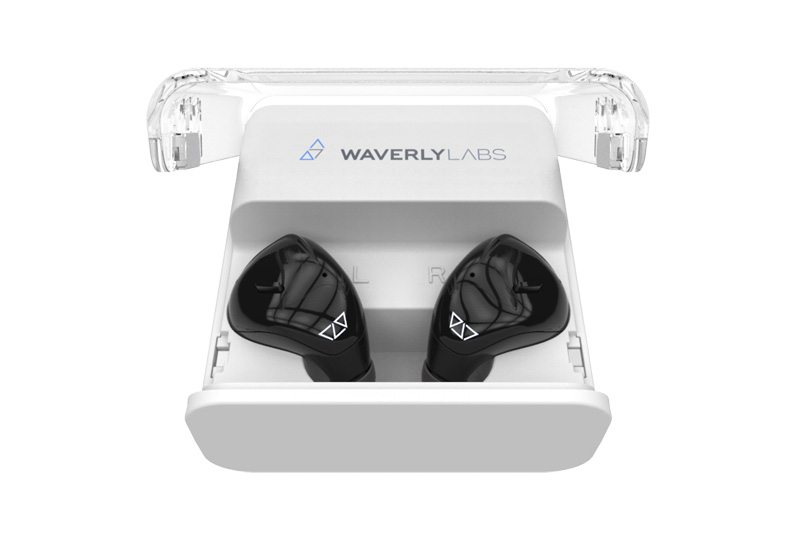
The Pilot works by having a normal conversation with the other person, and each of you sharing an earpiece. As you speak, the earpieces translate what you say, both audibly and through a text-like format in the phone app through wireless signals. You can also have a conversation with up to four people with the Pilot. At the time of this article, Waverly Labs is still taking preorders for their latest treasure in development. You can contact them here.
In this interview, CEO of Waverly Labs, Andrew Ochoa, tells us about why and where the idea for a translating earpiece came from:
Whether the Pilot becomes the future in international communication or not, the technology to harness it is certainly there, and it's exciting to see companies focused on innovative products that could bring more people together.
Now, who can work on the Star Trek Transporter? Beaming us up would be nice, Scotty.
Images via Waverly Labs.

Want All Your Video Calls and Apps On One Screen? You'll Want To Know About This.

This is part of a special series, presented by Thrivent Financial, that focuses on a diversity of American inventors and innovations.
You have a call from marketing on your land line. Meanwhile, you need to text your spouse on your mobile phone. In a minimized window, you are trying to follow Slack chat and hoping you didn't miss anything important. All of these digital communication tools were unheard of a handful of years ago, but now they are ubiquitous. Have you ever wondered, however, how much of your time you spend switching from window to window and device to device?
Labinot Bytyqi came to the U.S. about 15 years ago with his family and soon began working in tech. He noticed that many hours of productivity were lost every month as people tried to juggle all of their digital devices. He felt that the answer to the issue was a single platform that could accommodate every piece of communication all at once.

HELLO is a voice controlled smart device app that allows you to engage in live broadcasting, wireless screen sharing and video conferencing. It can be used on any TV. Best of all, the Solaborate app that runs the device is free.
HELLO allows people to collaborate on projects. People can share insights and experience even when they are far apart.
Bytyqi says that one of the things he likes most about the system he created is that it allows for better work-life balance. When he is traveling for business, he is still able to turn on the TV and use his app to broadcast what is going on at home. He and his wife and kids can see one another and share a moment even when they are thousands of miles apart.
In a world where technology often feels like it makes us more distant, it is good to see one geared toward strengthening our relationships and helping us stay closer, no matter how far we are apart.
In the video, we see how it works:
Images via Salaborate.

This Jacket Is Making Us Think Very Differently About Tech-y Wearables

This is part of a special series, presented by Thrivent Financial, that focuses on a diversity of American inventors and innovations.
While wearables like watches and fitness trackers are intended to get your more attuned and knowledgeable about your physical activities and health, the market continues to expand. We’re also now seeing innovators design clothing and shoes with smart technology.
Meet this creative couple who have brought us a hi-tech jacket inspired by the movie “Back to the Future.” Husband and wife team Aaron and Angela launched the startup Falyon Wearable Tech. As passionate designers with many years of experience in materials, tech, and innovation, they worked together in 2015 with a vision to bring the “Back to the Future” self-drying jacket to life.
The company grew to include friends and other designers who worked together to finally realize the vision of the SDJ-01 self-drying jacket in late 2015, which was successfully funded on Kickstarter. From that experience, they became even more determined to create wearable technology with a touch of nostalgia.
Falyon Wearable Tech first dipped their toes in the wearables scene with 2015’s SDJ-01 self-drying jacket. Building from that concept, these innovators realized there was more to be done to improve the design and tech features, and that they could craft a jacket that was more adaptable and convenient for the fast-changing world. Besides self-drying technology, people need a jacket that can adapt to weather, as well as a jacket that accommodates the modern mobile, constantly connected lifestyle.
They followed up the first jacket with the SDJ-02 version, with complete temperature control, with heating and cooling modes, making it a jacket for all weather. This is not a solution for climate change and the erratic weather that seems to come with it, but it’s a clever way to stay ready.

This Two-In-One Invention Can Light Up Your Yard And Help With Cleanup
This is part of a special series, presented by Thrivent Financial, that focuses on a diversity of American inventors and innovations.
The Cadilon is a multi-functional solar light and bag dispenser. The idea came from the husband and wife team Steve and Nancy Koch and Vinit Kathardekar.
First conceptualized as the perfect doggie waste bag dispenser, they evolved the idea to serve as a more widely applicable organizing, utility tool. It can be placed anywhere for the convenience of having bags at your fingertips. The unique design accommodates two standard doggie waste bags rolls, or up to a 13-gallon trash bag roll for your other yard cleanup needs. The solar LED light illuminates at night for a decorative touch to your patio or garden.

Kathardekar recently told People magazine:
“I’m not a prolific inventor, but when I see something, I wonder how it can be fixed,” Kathardekar said. “As a patent attorney, I always tell my kids that if they have had a problem with something, probably somebody else did, too. There are times when someone has thought of the same idea and that’s perfectly fine, but then other times somebody may not have thought of it.”
The product is now available online and in major stores across the country.
Image via Cadilon.

How the Invention Of Caller ID and Call Waiting Were Moments in Black Excellence

This is part of a special series, presented by Thrivent Financial, that focuses on a diversity of American inventors and innovations.
Shirley A. Jackson, a leading American scientist, is one of the greatest contributors to the capabilities of the landline telephone system. The first African-American woman to graduate with a doctorate in particle physics, she went on to work for Bell Laboratories, the research division of AT&T, where she worked on programs that marked major advances in the field of telecommunications.
Jackson helped to invent a variety of developments that revolutionized the way we communicate, from touch-tone dialing to call-waiting and Caller ID. One contribution, however, looms bigger than most: the invention of fiber-optic cables that link the world's communication systems.

She was inducted into the Women in Technology International Foundation Hall of Fame (WITI) in June 2000. WITI recognizes women technologists and scientists whose achievements are exceptional. Dr. Jackson was inducted into the National Women’s Hall of Fame in 1998 for her significant and profound contributions as a distinguished scientist and advocate for education, science, and public policy.
Image at top via Quino Al/Unsplash.

These Molecular Inventions Helped Curb A National Health Crisis

This is part of a special series, presented by Thrivent Financial, that focuses on a diversity of American inventors and innovations.
There’s something you may not know about inventions: they're not all about moving parts or mass production. Inventions can be tiny — as in, molecular.
Flossie Wong-Staal is a specialist in virology, particularly HIV/AIDS (she and her colleagues discovered it in 1983), and has invented many protocols and tests surrounding the virus, including an invention that led to the world's first HIV test. She also developed an enzyme-based "molecular knife" that can cut up genetic information in AIDS patients.
She completed her postdoctoral research at University of California, San Diego in 1974, before leaving to work at the National Cancer Institute. It was at the institute where Wong-Staal began her research into retroviruses.
In 2002, Discover named Wong-Staal one of the fifty most extraordinary women scientists. Wong-Staal remains as a Research Professor of Medicine at UCSD. In 2014, she was recognized by the Asian Heritage Awards, who made this great tribute video:
